
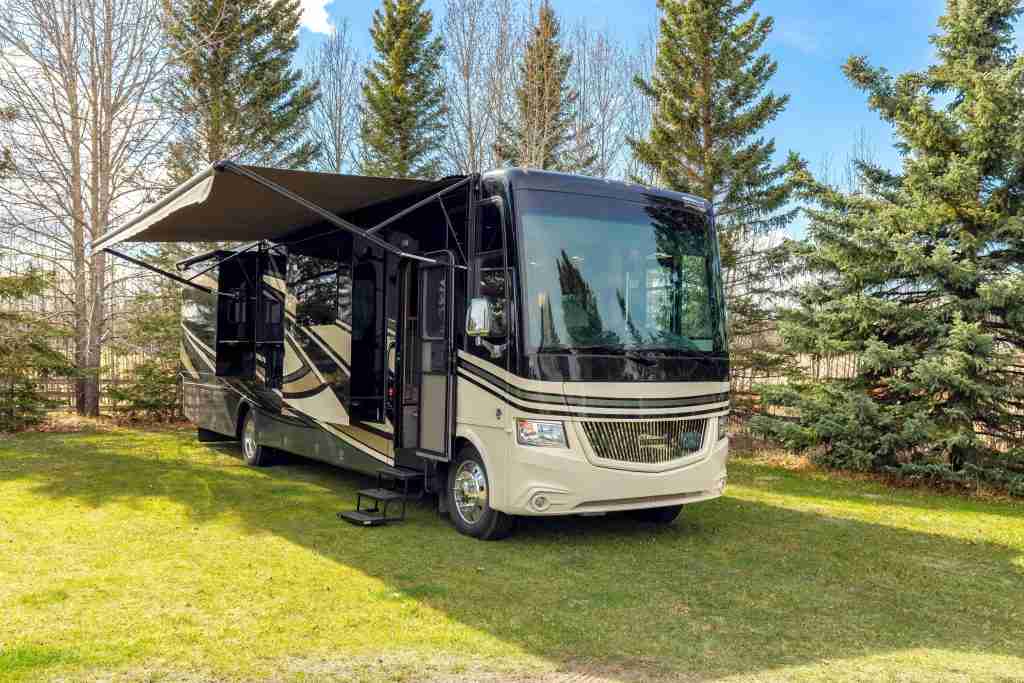
If your camper’s factory steps bounce underfoot or feel too narrow to trust, an upgrade is worth a look. Ground-supported solid steps and traditional underbody folding steps suit different rigs and camping styles. Before you make the upgrade, here’s all you need to know about RV entry steps.
What to Look for in RV Entry Step Upgrades
Ground-supported solid steps mount at the doorway and pivot outward for use. Adjustable legs rest on the campsite surface, while the assembly folds upward into the entry for travel. Although the assembly still pivots on a hinge at the doorway, its rigid frame and adjustable ground-contact legs reduce the bounce you get from unsupported underbody steps. When the RV is level and the legs are adjusted correctly, the staircase provides a more predictable tread pattern than many worn or loosely supported factory steps.
Anyone carrying groceries in both hands, managing a dog on a leash, or dealing with sore knees notices that difference. Our entry step selection includes both solid and manual models, so it helps to know which specs matter before you start comparing.
Here are some of the features different models offer:
- Step count and rise: Triple and quad configurations are the most common. Quad steps spread the same total height across more treads, which lowers the rise on each one and makes the climb gentler.
- Tread width and depth: Wider, deeper treads feel more secure than the shallow ones on many factory folding steps. Check the tread dimensions rather than the overall unit size.
- Weight capacity: Manufacturers publish a rated capacity for each model. Compare that rating to the heaviest person or load that will regularly use the steps.
- Leg adjustment: Ground-supported steps rely on their legs making firm, even contact with the ground. Look at how the legs adjust and how much range they offer, since campsites are rarely level.
- Mounting and installation: Many solid steps use a doorway-mounted hinge plate and include installation hardware, though drilling is often required. Follow the model-specific installation manual rather than assuming a universal fit.
- Added weight: A solid step assembly weighs more than the folding unit it replaces, and that weight counts against your cargo capacity. The RV Safety & Education Foundation is a good starting point for understanding how added equipment affects your rig’s weight numbers.
Solid steps cost more than folding replacements, and they add weight you carry on every trip. The stability they deliver also depends on correct installation, firm ground contact, properly adjusted legs, and the condition of your floor and doorway. For full-timers and anyone who uses the door many times a day, the added cost and weight are well worth it.
When to Use Folding Steps for Your RV
Traditional folding steps are still the better choice for many rigs. They retract beneath the doorway for travel, so they don’t occupy the RV’s interior entry area. Their underbody location, however, leaves them exposed to road debris, moisture, and corrosion. They can also be repaired one component at a time instead of replaced as a whole assembly.
Folding steps make the most sense when:
- Swing-out room is limited: Doorway-storing solid steps need clear space outside the RV to swing down. Underbody steps retract beneath the floor instead, preserving that access when you park close to a wall, another vehicle, a storage-bay obstruction, or a neighboring site.
- The rig sees occasional use: A weekend trailer that comes out a few times a season may not justify the cost of a solid step.
- You’re replacing a worn unit: Swapping a bent or seized folding step for the same style is usually the fastest and cheapest fix.
Many RVers run folding steps for years without complaint. The bounce that bothers one person barely registers for another. Stand on both styles at a dealer or an RV show if you get the chance.
Measuring and Fitting RV Steps Before You Buy
Fitment is where most step upgrades go wrong, though it’s straightforward to get right once you know what to check. Doorway-mounted systems are matched to your specific entry rather than to your rig’s brand or length, so a friend’s measurements won’t transfer. That’s why manufacturers publish measuring guides. Write your numbers down rather than trusting your memory at checkout, since our selection of RV steps, handrails, and step rugs is much easier to narrow down with the figures in front of you. A few minutes with a tape measure prevents most fitment problems.
Verify each of the following before you order:
- Inside doorway width: Measure the clear opening at the entry, not the door panel. Most product sizing is built around this number.
- Threshold height above the ground: Measure from the ground to the floor or threshold with the RV parked and leveled the way you normally camp. This drives how many treads you need and how far the legs have to extend.
- Threshold dimensions and shape: Note the depth and profile of the threshold itself. The hinge plate mounts in this area, and an unusual shape can rule out a given model.
- Clearance beneath the entry and screen doors: Measure the gap below each door. The assembly and its hardware need to clear both without binding.
- Door closure over the hinge plate: Confirm that both the exterior door and the screen door still close correctly once the hinge plate is in position. MORryde’s installation process calls for checking this with the steps lowered, and it’s easy to overlook until the hardware is already drilled.
- Interior clearance for the stowed assembly: The folded steps take up part of your entry during travel, so check that nothing inside the doorway interferes. On some installations, the legs need to be retracted to fit within the door opening.
- Product-specific obstructions and requirements: Slide-outs, storage bay doors, propane lines, and frame members near the entry can all affect what will install cleanly. Each manufacturer lists model-specific construction requirements, so read those before you decide.
If your measurements fall between two sizes, or if any of the clearance checks come out marginal, contact the manufacturer before ordering rather than guessing. Confirming fit beforehand takes far less effort than returning an assembly after you’ve drilled into the doorway.
RV Step Accessories That Improve Safety and Comfort
In addition to your new RV steps, there are many accessories to add for extra safety and comfort. A handrail is usually the first thing people add, since an RV entry climbs higher and steeper than a typical set of house stairs. The Lippert entry assist handrail mounts to the step assembly itself rather than the doorway, so it moves with the steps.
Traction and tracked-in dirt are the other common complaints. A step rug adds grip on wet mornings and catches gravel before it reaches your floor. Peel-and-stick anti-slip treads do a similar job on bare metal steps for very little money. Both wear out eventually, so plan to replace them every few seasons, depending on how much you travel. Our complete RV travel prep guide and our RV AC maintenance checklist both treat small hardware checks as part of a normal pre-trip routine.
Are solid RV steps worth the upgrade?
For most people who use their RV regularly, yes. You will notice the stability every time you step onto the rig, which helps with everyday use. The upgrade costs more, adds some weight, and requires level footing and occasional leg adjustments to work as intended, but is well worth it in the end. Leveling the legs becomes part of your setup routine, and in return the entry feels the same every time you use it.
New entry steps are a small upgrade that you notice each time you camp. Ground-supported solid steps give you a steadier climb and a more predictable tread pattern, while underbody folding steps stay lighter and keep the entry clear in tight spots. Make the upgrade today for an even better camping experience next time you head out.
Frequently Asked Questions
Will a solid step fit my camper?
That comes down to your door opening width and threshold height, which vary by model and floor plan. Measure both before ordering and compare them against the fitment information for the specific step you’re considering.
How much weight do RV steps hold?
Capacity varies by model and configuration, and manufacturers publish a rating for each. Check the listed rating rather than assuming, especially if the steps will regularly carry a heavier load than one person.
Should I choose a triple or quad step?
Threshold height is the deciding factor. A quad spreads the same total rise across four treads instead of three, so each step is shorter, and the climb is easier. Taller entries generally call for a quad, while shorter ones do fine with a triple.
Can I install RV steps myself?
Many solid steps mount with a doorway hinge plate and include hardware. This puts the job within reach of a DIY owner with basic tools, though drilling is often required. Work from the model-specific installation manual rather than a general guide. A second person helps considerably, since the assembly is heavy and needs to stay square while you mark and drill. Plan for the original underbody step as well. Depending on the installation, it may be removed, left in place, or swapped for a storage box.
Experience Outdoor Living!
At Omni Outdoor Living, we make it our mission to help customers get the most out of their outdoor experiences. We offer quality outdoor products focused on outdoor recreation, DIY projects, entertaining friends and family, or just relaxing outside.


